You, the Curator of Your Own Images
08 September 2022
by Gustavo de Paula
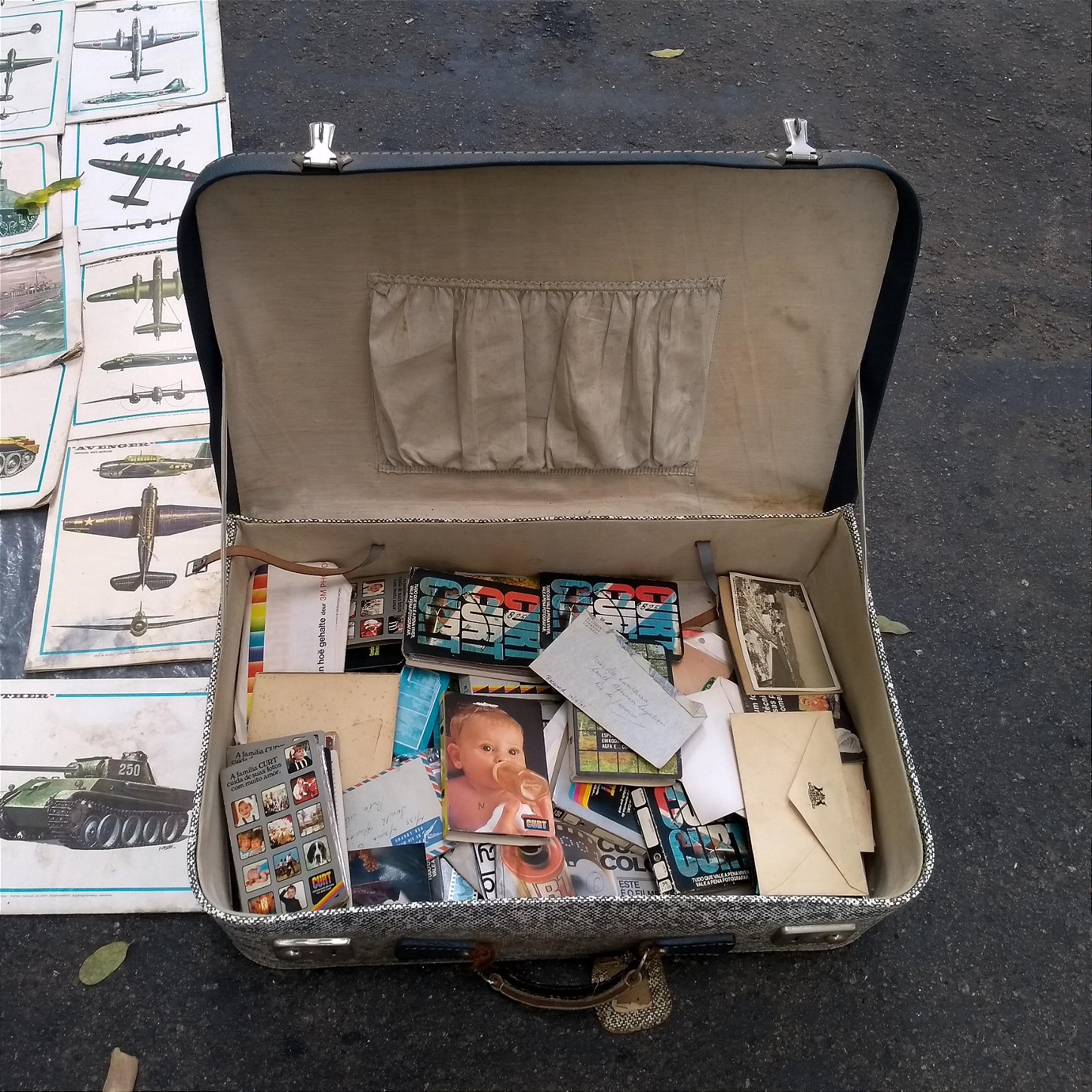
When we began our work in 2014, our thinking about the circulation of images was centred almost entirely on the artist. Creative freedom and the pursuit of the fullest possible expression of authorship were the driving forces behind our motivations and decisions. We hoped that people would connect with our images—indeed, such a connection was essential—but our reflections rarely extended beyond the recognition of the artists' work itself.
As our images encountered an ever-growing diversity of viewers over time, however, a new curiosity gradually emerged. It was no longer enough simply to hope that people would identify with the work; we wanted to understand why they did. What led someone to acquire a particular photograph? What held another person's attention before a collage for several minutes? Why would someone pass by a drawing entirely untouched by what it sought to communicate?
This curiosity was sharpened by a simple observation: many people do not trust their own responses to images and, as a consequence, do not allow themselves to become the curators of their own visual world. There is a widespread belief that one needs a form of approval—a seal of legitimacy, an expert gaze capable of authorising whether a work of art is worth choosing or not.
There is nothing inherently wrong with seeking endorsement or placing trust in the judgement of others. Indeed, we believe this happens, to a greater or lesser extent, throughout our lives. We are all shaped by overlapping networks of ideas, influences and relationships, woven together for countless reasons. These networks carry with them shared notions of what is considered beautiful, desirable, or, conversely, what is rejected or deemed unworthy. Choosing to embrace such a framework of associations may itself be an expression of our freedom: the freedom to belong, to identify with a particular community, and to recognise it as a source of reference and guidance.
In this way, the curation of one's visual world may be entrusted to the gallery recommended by a manager, to the approval of a religious authority, to an artist whose political views resonate with one's own, to interior design professionals, or to art critics who claim to define what is worthy of appreciation. It is interesting to observe how homogeneous aesthetic preferences become within these groups, and how often artists' work comes to reproduce the very same patterns.
The problem arises when this belief in the need for external validation becomes fixed as the only legitimate path. When that happens, it begins to suffocate the possibility of personal autonomy. What began, for us, as a commitment to the freedom to create gradually evolved into a commitment to the freedom to curate. Guidance, expertise and informed opinion are all welcome—provided they remain the result of free choice rather than unquestioned dependence. Every individual has deeply personal reasons for choosing the images that accompany their life.
This concern becomes even more significant within a context in which both the art market and academic institutions, whether intentionally or not, often contribute to making access to art appear exclusive. The result is a landscape with relatively few collectors and a widespread feeling among the public that they lack the knowledge required to truly appreciate works of art.
Meanwhile, the unprecedented proliferation of images made possible by smartphones, computers and social media has transformed the way we engage with the visual world. Although this constant flow has undoubtedly placed increasing demands on our attention and our capacity to process information, it has also brought us into a new level of visual intimacy. Every day we are compelled to decide which images deserve our attention and which we choose to ignore, tracing our own path through an almost limitless visual landscape.
This act of selection—so essential to preserving our mental clarity in the digital environment—has inevitably begun to shape our relationship with physical images as well: paintings, prints, framed works, stickers, photographs, and every other form of visual expression.
In our view, this transformation has quietly fostered a new generation of potential collectors of printed art and other visual media. Yet many of them remain hesitant, still guided by long-established references and lacking opportunities to discover new ones. Time and again, at street fairs and public exhibitions, we have heard visitors remark that they had rarely encountered work like this before, that it felt somehow different, followed almost inevitably by the familiar phrase:
"It's beautiful... but I don't really understand art."
To distance someone from curating the images that will accompany their daily life is, in some measure, to deprive them of what we believe to be one of art's greatest possibilities: its capacity to become a space for dialogue. A place before which we stand, contemplating not only the work itself, but also the shifting perspectives and subtle movements of our own gaze.
We are not always able to explain why certain images move us. Taking an image home is, above all, an opportunity to observe oneself. To notice what draws your attention and to reflect on the reasons behind that attraction. To decide the place you wish to give it: whether to display it openly or keep it somewhere more intimate; whether it belongs in the living room or the bedroom. To discover the meaning it holds for you—and, perhaps one day, to recognise when that meaning has come to an end. To preserve it, to let it go. To understand the image, and in doing so, to understand yourself.
To surrender entirely to external curatorial criteria is, at least in part, to relinquish this dialogue. Meanings that arrive already defined, motivations already prescribed, inevitably diminish those that emerge from one's own experience.
Making autonomous curation possible is also an economic and social endeavour. Demonstrating that someone can become an art collector also means showing that collecting art is genuinely within their reach. Exclusive galleries serving a restricted audience can—and should—coexist with small fairs and independent exhibitions. Reproductions and modest formats can—and should—share space with major original works.
Limited-edition Fine Art prints offer an excellent point of entry for emerging collectors: combining museum-quality production, accessible prices and a direct connection with the artist. They are also one of the most meaningful ways of entering the art market.
A wall curated over time—whether guided by a minimalist or a maximalist sensibility—can become a private museum, shared with those one chooses to welcome into it. There are even more accessible formats—magnets, zines, postcards and stickers—that may come together as a visual constellation or quietly occupy a place of their own.
Ultimately, paying closer attention to collectors has transformed our own understanding of what we do. Our commitment is no longer solely to the freedom of the artist, but also to the freedom of the collector. Not only to the pursuit of an artist who is fully present in the work, but also of a collector who is fully present in their choice.
It is the authenticity of both presences that gives truth to the encounter.
The invitation remains.
You, the curator of your own images.
-------
Please, visit www.vendofotografias.com.br


Comments
Post a Comment